Digital Currency Fluctuations Reshaping High-Stakes Bonuses in Live-Streamed Casino Environments
Written by Leon Schmid · Aug 20, 2026

Digital Currency Fluctuations Reshaping High-Stakes Bonuses in Live-Streamed Casino Environments
Live streaming casino operators have integrated cryptocurrency payments into their high-stakes incentive programs at an accelerated pace since 2024, and volatility in digital asset prices directly alters the real-world value those rewards deliver to players. When bitcoin or ethereum swings 10 percent or more within a single trading session, the purchasing power of a promised 5 bitcoin welcome package or a 2 ethereum VIP cashback offer shifts accordingly, which forces operators to adjust their promotional structures or absorb the difference in their own ledgers.
Mechanics of Crypto Incentives in Live Streaming Platforms
Operators structure high-stakes incentives around fixed crypto amounts rather than fiat equivalents because blockchain transactions settle instantly and reduce processing fees, yet this approach exposes both parties to price risk. A streamer who qualifies for a 10 bitcoin monthly loyalty drop sees that reward's dollar value rise or fall between the moment of qualification and the moment of withdrawal, and data from major platforms shows that players increasingly time their cash-outs around favorable market conditions. Live dealer studios that broadcast from Malta, Gibraltar and Curacao maintain separate crypto wallets for different currencies, which allows them to hedge some exposure through automated conversion tools, although sudden market moves still outpace those safeguards.
Research from academic teams at the University of Sydney indicates that incentive redemption rates drop when the underlying cryptocurrency loses more than 8 percent of its value within 48 hours of the reward being credited. Those same studies track how operators respond by inserting price-floor clauses into VIP contracts, guaranteeing a minimum fiat equivalent if the asset falls below a preset threshold.
Observed Effects on Player Behavior and Operator Costs
High-volume players monitor exchange rates closely before accepting crypto-based perks, and many delay claiming rewards until the market stabilizes. In August 2026 exchange data showed ethereum dropping 14 percent over five days, which coincided with a measurable decline in claimed high-roller reload bonuses across several live streaming sites. Operators absorbed part of that volatility by increasing the nominal crypto amounts offered, yet their overall promotional budgets rose because the underlying asset had to be purchased at higher fiat cost during the recovery phase.
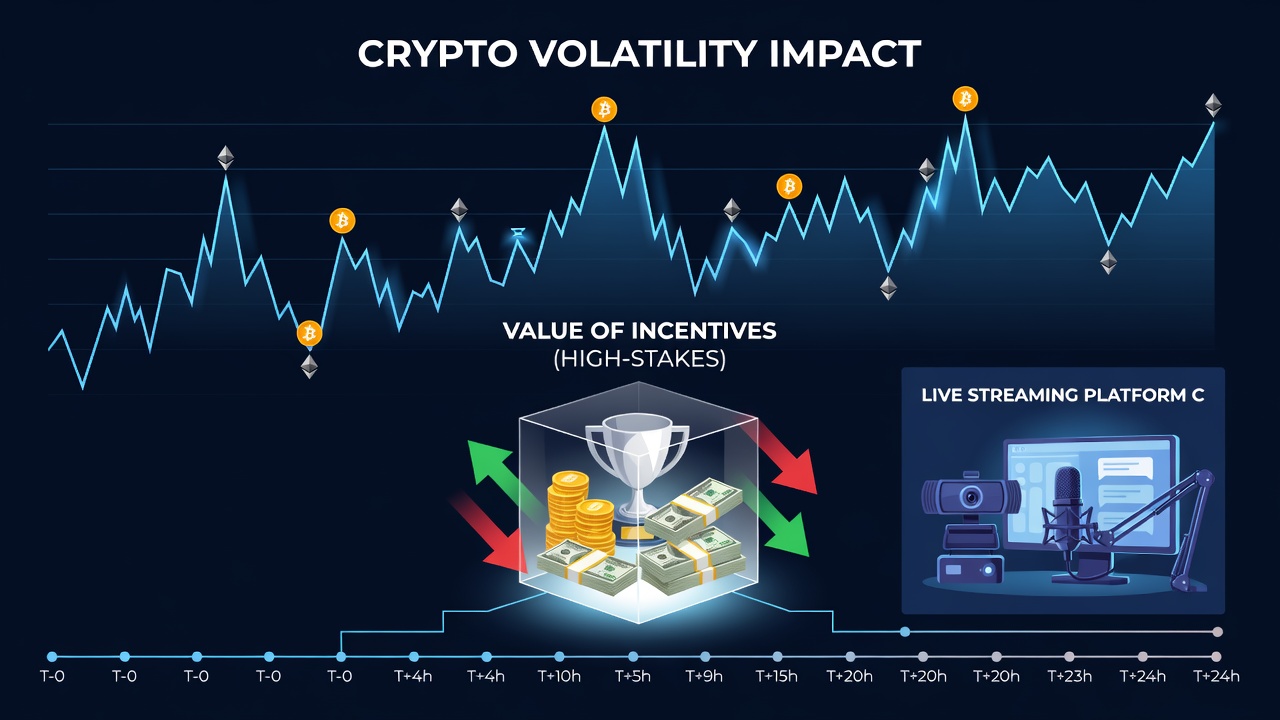
Industry reports compiled by the European Gaming and Betting Association reveal that platforms offering crypto incentives experienced a 22 percent increase in hedging expenses during periods of elevated volatility compared with stable-coin alternatives. Some operators shifted portions of their VIP programs to stablecoins pegged to the euro or US dollar to limit this exposure, while others retained bitcoin and ethereum for marketing appeal and simply built larger reserves to cover potential shortfalls.
Regulatory and Market Context Across Regions
Regulators in Nevada and New Jersey require operators to disclose the volatility risk attached to any cryptocurrency reward, and those disclosures now appear in the terms of high-stakes promotions. Australian authorities have taken a similar approach, mandating that platforms publish the 30-day average price used to calculate incentive values so players understand the reference point. These rules emerged after player complaints rose in early 2025 when several large bitcoin rewards lost significant value between crediting and withdrawal.
Live streaming studios that operate across multiple jurisdictions maintain separate incentive pools denominated in different assets, which reduces concentration risk. Observers note that platforms with diversified crypto holdings weathered the August 2026 price drop more effectively than those heavily weighted toward a single volatile asset.
Adjustments in Promotional Design
Operators have begun offering hybrid incentives that combine a fixed crypto amount with a fiat top-up if the asset price moves outside a defined band. This structure appears most often in loyalty programs aimed at players who wager above certain thresholds per month. Data from platform analytics shows that such hybrid offers maintain higher redemption consistency even during turbulent market periods.
Payment processors that specialize in casino crypto transactions have introduced real-time volatility alerts that notify both operators and players when an asset moves beyond preset parameters, giving parties the option to convert or hold before settlement. These tools gained wider adoption after several high-profile incidents where delayed withdrawals turned large nominal rewards into far smaller fiat sums.
Conclusion
Cryptocurrency volatility continues to influence both the design and perceived value of high-stakes incentives offered by live streaming casino operators, prompting ongoing adjustments in contract terms, hedging strategies and disclosure practices. Platforms that adapt their promotional structures to account for price swings maintain steadier engagement from high-volume players, while those that do not face increased costs and reduced redemption rates during market turbulence. The pattern established through 2026 suggests that incentive programs will keep evolving alongside digital asset markets rather than settling into any single fixed model.